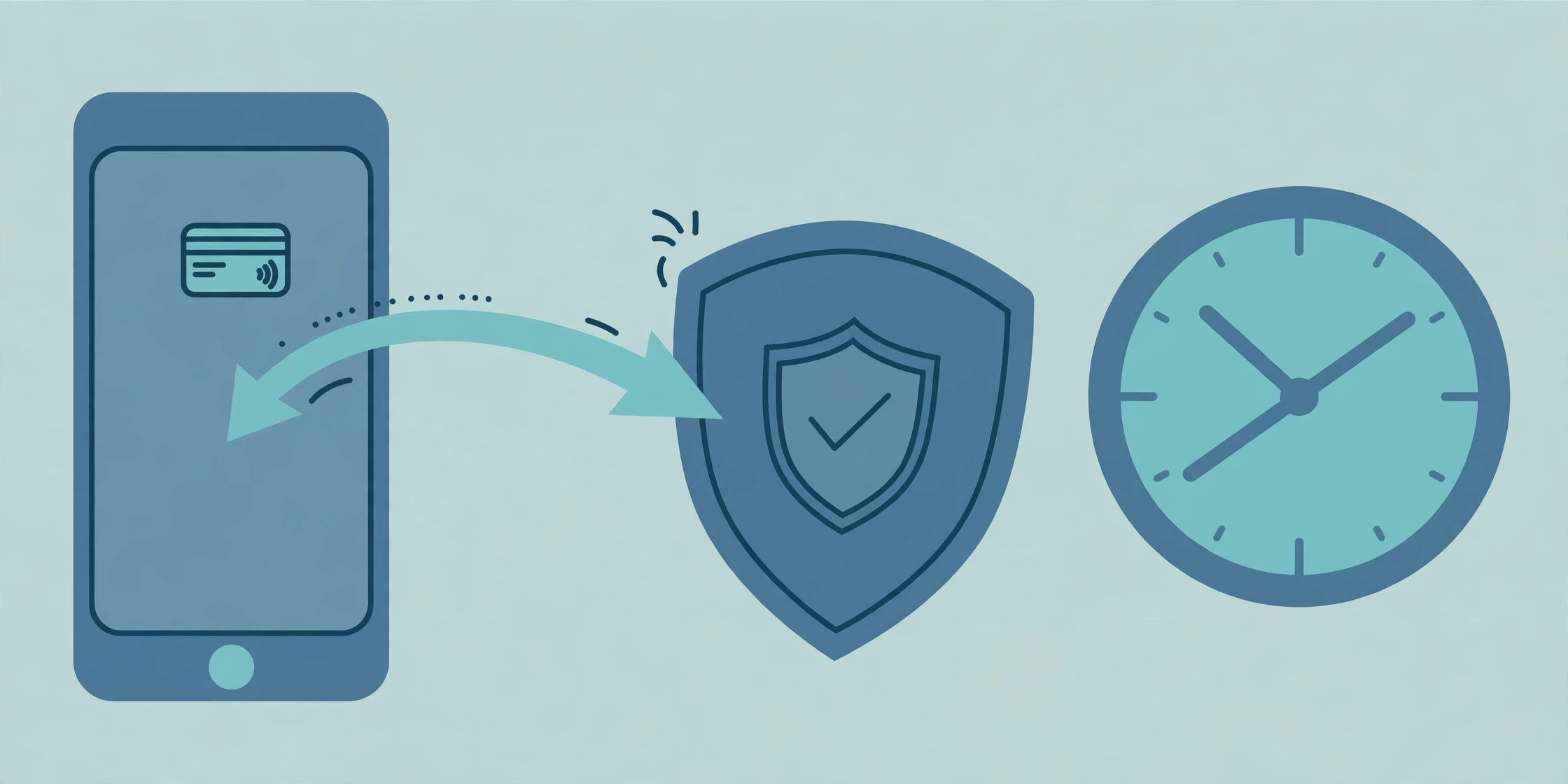
It takes one wrong digit. You type a phone number, the app shows a name that looks almost right, you enter your PIN — and a second later the money is sitting in a stranger’s account. If that has just happened to you, skip the panic and read this page in order. The steps below are the official ones, arranged by the clock, because with UPI mistakes the order and the speed genuinely matter.
First, one honest fact so the rest makes sense: a completed UPI payment cannot be pulled back by you, and your bank cannot simply reach into the other person’s account and take it out. In most wrong-transfer cases, the money comes back through a dispute process — and usually only if the person who received it agrees to return it, or their bank can hold it before it is spent or withdrawn. That is exactly why the first hour is precious: money that is still sitting untouched in the receiver’s account is far easier to freeze and return than money that has already moved.
The first 10 minutes: steps 1–3
Step 1 — Stop. Do not send anything else
Do not send a second payment to “test” the ID, and do not pay any amount to anyone who messages you offering to recover the money for a fee. Recovery agents who appear within minutes of a wrong transfer are a known scam pattern. Nobody legitimate charges you to return your own money, and no real bank or NPCI officer will ever ask for your OTP or UPI PIN.
Step 2 — Save the transaction details before you do anything else
Open the payment in your UPI app and screenshot the confirmation screen. You need four things, and every complaint route below will ask for them:
- The 12-digit UPI transaction ID / UTR number
- The exact amount and the date and time
- The UPI ID or phone number the money actually went to
- The name the app showed for the receiver
Also note your own UPI ID and the bank account the money left from. Keep the screenshot outside the app too — in your gallery and, if possible, mailed to yourself.
Step 3 — Raise the complaint inside the same UPI app, right now
Every major UPI app has a complaint flow attached to the transaction itself. Open the payment, look for “Help”, “Raise a complaint” or “Report this transaction”, choose the wrong-transfer option and submit with the details from step 2. This does two things: it time-stamps your complaint within minutes of the transfer, and it pushes the case into the official dispute system that NPCI runs between your bank and the receiver’s bank. A complaint raised in the first hour carries a very different weight from one raised next week.
Within the first hour: steps 4–5
Step 4 — Call your bank and ask for the dispute to be raised formally
Use the customer-care number printed on your debit card or your bank’s official website — not a number from a random search result or a forwarded message. Tell the bank clearly: “wrong UPI transfer, I want to raise a dispute and request a chargeback/return.” Ask for the complaint or SR number and note it down. The app complaint and the bank complaint are not duplicates; the bank is the party that actually talks to the receiving bank, so this call is the one that starts the money-side process.
While you wait for the process, one caution: if you know or can reach the person who received the money — a wrong digit often lands with someone whose number is one digit away from your intended payee — a polite message asking them to return it through their own bank is fine. Many honest receivers simply agree. What you should not do is share your bank details, card number or any code with them; a genuine return needs none of that.
Step 5 — If it was fraud, not a mistake, switch to the crime route immediately
This guide is about an honest wrong transfer. But if someone tricked you into making the payment — a fake customer-care call, a screen-sharing app, a “refund” that asked you to enter your PIN — that is cyber fraud, and it has a faster, separate route:
- Call 1930, the national cybercrime helpline, as soon as possible. Quick reporting gives the best chance of the money being held in the receiving account.
- File a report at cybercrime.gov.in with the same transaction details.
Do not use the fraud route for a plain wrong-digit transfer; it can slow your case down. And do not skip it if fraud is what actually happened — the bank dispute alone is the slower road.
Days 1–30: steps 6–7
Step 6 — Put the complaint in writing with your bank
If the app and phone complaints have not produced movement within a few days, visit your home branch or use the bank’s official complaint email/grievance portal, and submit the case in writing with the UTR number, the app complaint ID and your call’s SR number. Written complaints create a dated record, and that record is what the escalation step below runs on.
Step 7 — Escalate to the RBI if the bank does not resolve it
Banks are expected to act on complaints within a set time. If your bank has not resolved the case or has closed it without a proper answer, you can escalate free of cost through the Reserve Bank of India’s Complaint Management System at cms.rbi.org.in, and from there to the RBI Integrated Ombudsman. Keep the sequence honest and simple: app → bank → written complaint → RBI. Escalating with a complete paper trail works far better than escalating with frustration alone.
What actually decides whether the money comes back
Three things, and none of them is luck:
- Speed. A complaint in the first hour can find the money still sitting in the receiver’s account. A complaint next month often finds an empty account.
- The receiver’s response. For a genuine wrong transfer, return usually needs the receiver’s consent or their bank’s action on the dispute. Many receivers agree quickly, especially when the bank contacts them officially.
- Your paper trail. UTR number, complaint IDs, SR numbers, dates. Cases with clean records move; cases described from memory stall.
And the limit, stated plainly: if the receiver refuses and the money is gone, recovery can become a police and civil matter, not a banking one. No app, agent or paid service can change that — which is why anyone promising guaranteed recovery for a fee is lying to you.
Before it happens again: a 60-second prevention habit
- Read the name, not just the number. After entering a UPI ID, the app shows the registered name of the receiver. If that name is not exactly who you meant to pay, stop — however similar it looks.
- Send ₹1 first to any new payee for a large payment, and confirm receipt on a call or message before sending the rest.
- Prefer scanning the receiver’s own QR code over typing numbers for in-person payments; a scan cannot have a typo.
- Lock the app, not just the phone — a separate app lock and a strong phone password mean a lost phone is not an open wallet. Our guides on protecting your phone from hackers and creating a strong password cover both setups properly.
- Never enter your UPI PIN to “receive” money. Receiving never needs a PIN. Anyone saying otherwise is running the oldest UPI scam there is.
Frequently asked questions
Can my bank reverse a UPI payment on its own?
No. Once a UPI payment is completed, the bank cannot unilaterally pull it back from the receiver’s account. The bank raises a dispute through the NPCI system, and the money typically returns with the receiver’s consent or when the receiving bank can hold and return the funds. This is why raising the dispute immediately matters.
How long does a wrong UPI transfer refund take?
There is no fixed timeline. Straightforward cases where the receiver agrees can settle in a few days to a few weeks. Cases needing escalation, an uncooperative receiver, or a police complaint take longer. Anyone who quotes you an exact day is guessing.
I sent money to the wrong UPI ID and the person is refusing to return it. What now?
Keep the bank dispute active, file the written complaint if you have not, and escalate through the RBI Complaint Management System at cms.rbi.org.in if the bank does not resolve it. For larger amounts or a receiver acting in bad faith, a police complaint at your local station or on cybercrime.gov.in creates the legal record. Keep every screenshot and complaint number.
The amount was small. Is it still worth complaining?
Yes. The in-app complaint takes a few minutes, costs nothing, and small amounts are often returned quickly precisely because the receiver has no reason to fight over them. The same complaint also protects you if a pattern of errors ever needs to be shown later.
Should I call 1930 for a wrong-digit transfer?
1930 is the national cybercrime helpline, meant for fraud — cases where someone deceived you into paying. A genuine wrong-digit mistake belongs in the app complaint and bank dispute route first. If there was any deception involved at all, treat it as fraud and call 1930 immediately.
Can a customer-care number from Google search help me faster?
Be careful. Fake customer-care numbers planted in search results and comments are a common way people lose a second amount right after the first. Use only the number on your debit card, inside your banking app, or on your bank’s official website — and remember that no real officer will ask for your OTP, PIN or card CVV.
The short version
Screenshot the transaction, complain inside the app, call your bank — all inside the first hour. Put it in writing if it stalls, and take the RBI route if the bank does not act. Nothing about a wrong UPI transfer is in your control after the PIN is entered except speed and paperwork — and handled quickly and cleanly, those two give your money its best real chance of coming home.
Leave a Reply